History
Daniel Cady
Professor
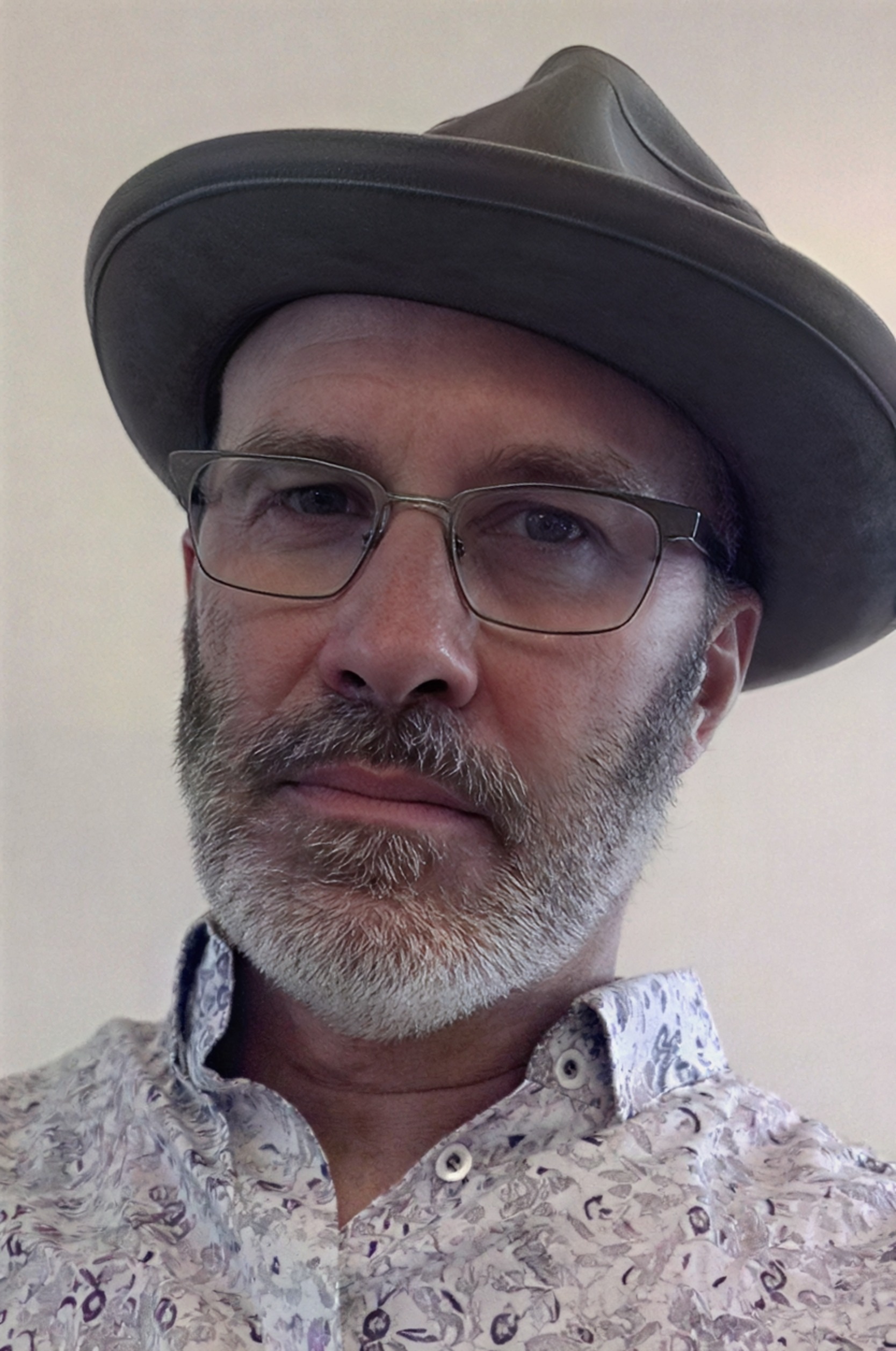
Office: Social Science 116
Email: dcady@csufresno.edu
Office Phone: 559-278-6817
Education:
Ph.D. - Claremont Graduate University (2005)
Biography:
Born in Chicago and raised in Los Angeles, Dan Cady is a professor of history at Fresno State. Obsessed with musicians and bands from a young age, he neglected school and instead devoted his time to vinyl, live shows, and cheap guitars. From the early eighties to the mid-1990s, he played guitar in a series of bands in both Los Angeles and San Francisco. After leaving music, Cady enrolled at San Francisco State, where he was mentored by former Sha Na Na member George Leonard. There, Cady earned bachelor's and master’s degrees in Interdisciplinary Humanities with a focus on religious history and musical icons (primarily Elvis Presley).
Cady received his Ph.D. with distinction in 2005 from Claremont Graduate University (CGU) in the field of American History. At CGU, he focused on nineteenth- and twentieth-century American regional history. Before working as the resident California historian at Fresno State, he taught at San Francisco State, California State University, Fullerton, and the University of Redlands.
Fall 2026
| Course | Days/Times |
|---|---|
| HIST 187 - California History | W 6:00pm - 8:50 pm |
| HIST210T - American Politics and Religion | T 6:00pm - 8:50pm |
| LS 100T - Elementary Social Studies | T 1:00pm - 3:50pm |
| SSCI 110 - California Studies | T/Th 9:30am - 10:45am |
Spring 2027
| Course | Days/Times |
|---|---|
| HIST 182 - Westward Movement Since 1848 | T/Th 12:30pm - 1:45pm |
| HIST 187 - California History | W 6:00pm - 8:50pm |
| HIST 210T - LA: Biography of a City | M 6:00pm - 8:50pm |
- California History
- History of the American West
- American Religious Music
- History of American Music
Articles and Book Chapters:
“The Other Beverly Hill Billies: Music, Memory, and Los Angeles’s Folkishness,” Southern California Quarterly, v.105:2 (Summer, 2023): 143-182.
“Rise, Fall, Repeat: El Monte’s White Supremacy Movements,” East of East: The Making of Greater El Monte, edited by Romeo Guzman, Caribbean Fragoza, Alex Sayf Cummings, and Ryan Reft (Rutgers University Press, 2020).
"Freethinkers and Hell Raisers: A Brief History of American Atheism, Agnosticism, and Secularism," Atheism and Secularity, Volume II, Edited by Phil Zuckerman. (Westport, CT: Praeger Press, 2009)
"A Battle Transplanted: Southern California's White Churches, Black Press, and the 1920s Ku Klux Klan," Journal of the West Vol. 48, No. 2 (Spring, 2009)
"Hell's Belles: Southern Moralists and the Making of White Southern California, 1915-1930" Journal of Interdisciplinary Humanities Vol. 26, No. 1 (May 2009)
“Woody Guthrie: Ramblin' in Black and White,” Woody Guthrie in Los Angeles, edited by Bill Deverell and Darryl Holter (Los Angeles: Angel City Press forthcoming), co-authored with Douglas Flamming
“In Tune with Innovation: West by Southwest Musical Panel at the 2009 Western History
Association Conference,” California History, 87:3 (June 2010), co-authored with Douglas Flamming
“Bringing in the Sheets: Southern Methodists and Ku Klux Klan in 1920s Los Angeles,”
in Landscapes of Encounter: Race and Religion in the American West, edited by Fay Botham and Sara Patterson (University of Arizona Press, 2006).
Undergraduate:
- California History
- History of the US West
- Social Science Methods for Pre-Service Teachers
- Jewish American Popular Culture
Graduate:
- Los Angeles: Biography of a City
- American Politics and Religion
- U.S. West Seminar
Dan Cady is currently writing Where Worlds Collide, a history of early-twentieth-century Los Angeles and its identity as a city of migrants. Transplanted Americans from the East dominated Los Angeles’s social and political order. By sheer numbers, white small-town Midwesterners imposed their vision of an orderly society, while a much smaller population of white Southerners campaigned for Jim Crow–inspired solutions to the perceived problems of an increasingly diverse city. Black Southern transplants strove to expand their civil rights in an environment of white Midwestern apathy and white Southern hostility. The battles these three groups fought, the alliances they forged, and the compromises they endured left an indelible mark on Los Angeles’s cultural history.
By following the interconnected lives of a handful of individuals, Dan Cady shows the interconnected world of Los Angeles’s migrant majority. The paths of a Black showgirl, a fiery white Southern preacher, a pathbreaking Black journalist, a gladhanding small-town Midwesterner, and a bunch of radio hillbillies intersected in unexpected and sometimes tragic ways. Their combined stories offer a glimpse into Los Angeles’s most dynamic-and misunderstood-era.