COSS Emerging Scholars 2026-27 Projects
This program is inclusive of all undergraduate COSS majors in good academic standing (2.0 GPA or higher)
- During either a semester or over the academic year, you will work alongside a COSS faculty mentor on a research, creative, or community outreach project designed by the faculty member.
- You will be eligible for a scholarship award processed through the Office of Financial Aid ($4,000 for the entire academic year or $2,000 for one semester). You do not need to have completed the FAFSA to be eligible.
- When you apply, you will be able to note which project(s) you prefer.
If you have any questions, please see our FAQs and/or contact Dr. Luis Fernando Macías (luisfernando@csufresno.edu).


Dr. Sophia Boutilier
Sociology
Assistant Professor
Effects of the USAID Shutdown and Executive Orders on Gender Equality in the U.S. and Abroad
In January 2025, the shutdown of USAID and the Executive Orders on DEI and “gender ideology” gutted a woman-dominated sector and halted initiatives for gender and social inclusion. Our qualitative study of 48 professionals studies the personal effects of these policies; their sector-wide impacts on gender equality work; and their implications for participatory democracy.
Student-scholars will have the opportunity to train and participate in coding and analyzing qualitative data; framing and contributing to academic and public-facing works; and presenting findings. These skills are essential for graduate school and professional work in research and project management.
The collaborative research team is composed of a Fresno State professor, a recent graduate, and an industry professional who are passionate about gender equality and committed to supporting each other. Through our diverse skills and networks, our goal is to foster growth, confidence, and a deeper understanding of how research can illuminate pressing global gender issues and inspire evidence-based advocacy.
Required Qualifications: English writing proficiency.
Preferred Qualifications: Literature review development, data analysis, writing and framing of findings.
Skills to Acquire: Literature review development, data management, data analysis, project management, writing up and disseminating findings.

Dr. Lisa Bryant
Political Science
Professor
Polarizing the Process: How Partisanship Has Affected the Administration of Elections
This is an ongoing project for Dr. Bryant's Carnegie Fellowship, and the final product will be a book examining how hyper-partisanship and political polarization have led to an increase in election skepticism and decreased trust.
Misinformation that plays off strong partisan beliefs has led to an increased number of threats against election officials. In response, many local election officials have changed the way they run elections.
The student working on this project will be responsible for tracking trends in claims about elections in the mainstream media, social media, and various other outlets. They will also help track threats against election officials and create a database of changes in state-level administrative policies for all 50 states. The student will learn how to conduct archival research and to code and summarize data, and ideally, how to create data visualizations and information tables.
Required Qualifications: Data collection.
Preferred Qualifications: Literature review development, data collection, data analysis.
Skills to Acquire: Literature review development, survey development/deployment, data management, data collection, data analysis, possibly some text analysis.
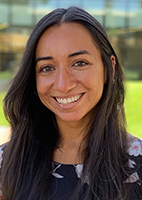
Dr. Amber Crowell
Sociology
Professor
Guaranteed Income for Fresno: Vision to Research to Policy
In 2024, we successfully launched a guaranteed income pilot in Fresno County as 150 families received $500 a month for 12 months. Through the Center for Community Voices, faculty at Fresno State served as program evaluators and collected robust data through a randomized control trial design using surveys and focus group interviews to demonstrate the impact that no-strings-attached cash can have on families living in poverty.
We are now moving into the next phase to try and turn research into policy - a campaign to change the narrative on poverty and the welfare state and bring a permanent guaranteed income to Fresno County. Scholars involved in this project should be excited to learn more about guaranteed income and economic justice research, collaborate with faculty on community outreach, hold research meetings with elected leaders, and launch a multimedia campaign.
As a mentor, I support students in deciding what skills they want to develop and what areas of the work will advance their own career goals.
Required Qualifications: Community engagement.
Preferred Qualifications: Creative work, project-based community outreach and work, bilingual English/Spanish speaker.
Skills to Acquire: Project management, community engagement, creative work, project-based community outreach and work.
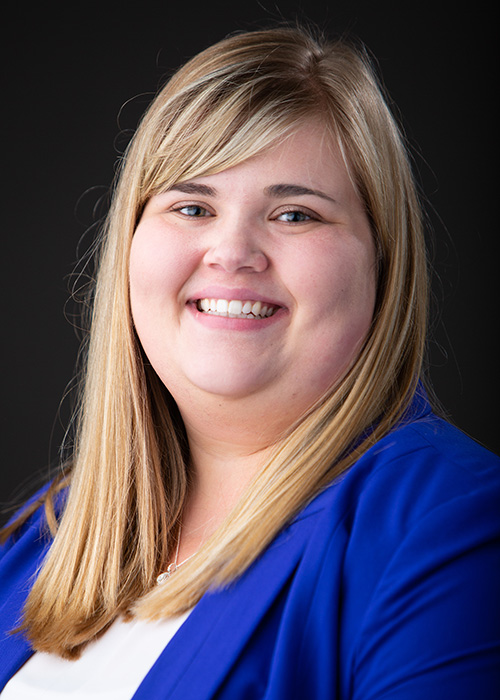
Dr. Josephine Hazelton-Boyle
Political Science
Assistant Professor
How Active Transportation Citizen Advisory Committees Shape Transportation Equity in California Cities
California cities and agencies often rely on citizen advisory committees to help ensure that transportation is accessible, representative, and responsive to diverse community needs. However, little existing research has examined whether and how these committees shape transportation equity. This research project examines the roles, challenges, and successes of citizen advisory committees in advancing transportation equity across the state.
As a student-scholar, you will gain hands-on experience in multiple aspects of applied research, including developing a comprehensive database of California’s active transportation advisory committees, assisting with analyzing interview data using qualitative software, and creating a related survey. If interested in taking your research skills to the next step, there is also the opportunity to present findings in the local Fresno community.
My mentorship approach prioritizes your growth and success. I create a structured, inclusive, and empowering environment where I provide guidance and am also eager to learn from your insights and creativity. My goal is for you to learn something meaningful through this process and to feel more prepared for your next academic or professional step.
Required Qualifications: Literature review development.
Preferred Qualifications: Literature review development, data management, data collection, data analysis, project management.
Skills to Acquire: Data management, data collection, data analysis, project management, presentation skills.
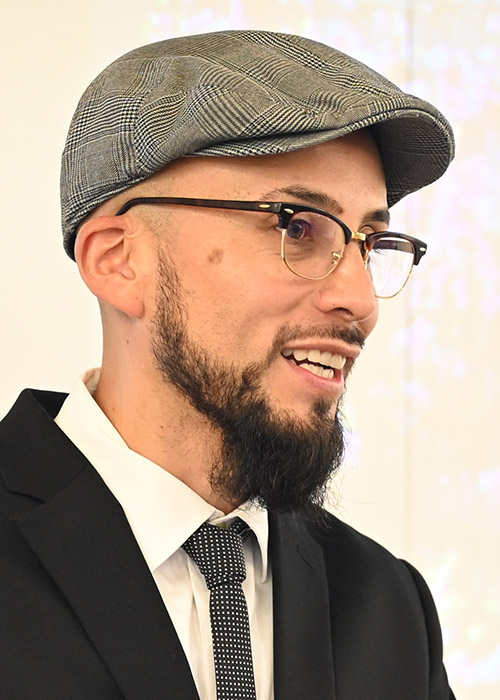
Dr. Luis Fernando Macías
Chicano and Latin American Studies
Associate Professor
Emerging Scholars: Exploring the responsiveness of a high-impact practice program at a Minority Serving Institution
Since 2005, many U.S. colleges and universities have adopted the Association of American Colleges and Universities (AAC&U) initiative to improve learning and sustain student engagement through ten high-impact practices (HIPs).
Unfortunately, high-impact programs are not always accessible to students from all socio-economic backgrounds. Thus, the purpose of this study is to evaluate the effectiveness of Emerging Scholars, a HIPs program that takes an assets-based approach to empowering underrepresented undergraduate students at an MSI in California’s Central Valley, including but not limited to Hispanic/Latinx, Black, Native American, first-generation college students, and students from low-income backgrounds.
This study aims to explore participants' experiences in the Emerging Scholars mentorship program through both quantitative and qualitative data collection over a five-year period, allowing for multiple cohorts of mentees to be recruited and followed longitudinally. A pre- and post-program survey will assess changes in students’ academic confidence, sense of belonging, and perceived support. Semi-structured interviews will offer deeper insight into students' personal experiences and the perceived impact of the mentorship relationship.
Required Qualifications: Project management, community engagement.
Preferred Qualifications: Literature review development, data collection, data analysis, project management.
Skills to Acquire: Literature review development, survey development/deployment, data management, data collection, data analysis, project management, community engagement, data evaluation, project-based community outreach and work.
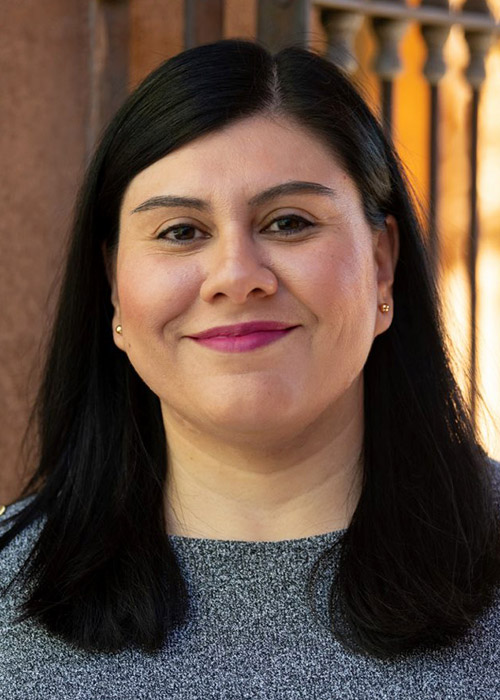
Dr. Alina Méndez
Chicano and Latin American Studies
Assistant Professor
Mexican Migration to the San Joaquin Valley, 1986-2009
The 1986 Immigration Reform and Control Act (IRCA) granted amnesty to more than two million undocumented migrants, and its Special Agricultural Workers Program was particularly important in facilitating the immigration status adjustment of undocumented migrants who worked in agriculture. Although IRCA promised to “solve” the immigration crisis, undocumented migration from Mexico increased in the 1990s because of the Latin American debt crisis and the liberalization of trade under the 1994 North American Free Trade Agreement.
As Mexican migration continued, many communities across the U.S. responded with xenophobia, which prompted state and federal action such as California Proposition 187 in 1994, and the federal Illegal Immigration Reform and Immigrant Responsibility Act in 1996.
This project examines a recent period that was marked by a sharp increase of Mexican migration to the U.S. and a demographic trend that particularly shaped many towns across the San Joaquin Valley.
The student selected to complete this project will learn how to write a literature review, acquire primary resource research skills, conduct oral history interviews, and undertake several revisions of a journal article manuscript that will clearly and compellingly demonstrate their research findings. Besides weekly meetings, the student will eventually write a paper of 20-25 pages and could pursue publication of their work or potentially use their preliminary findings as a form of graduate school research.
Required Qualifications: None
Preferred Qualifications: Literature review development, data collection, community engagement
Skills to Acquire: Literature review development, data management, data collection, data analysis, project management, community engagement
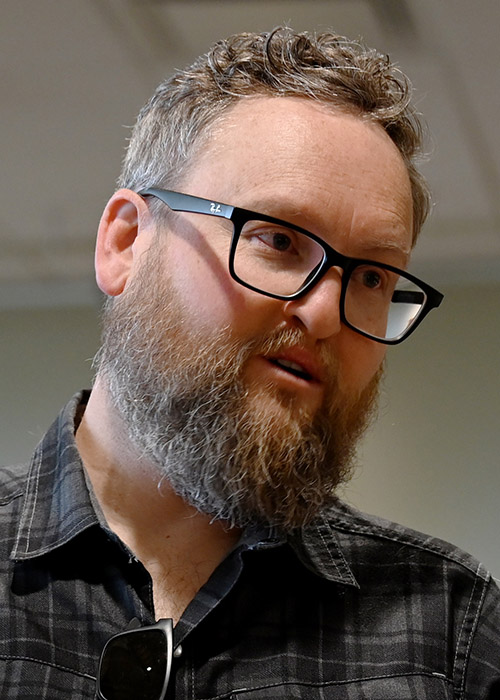
Dr. Justin Myers
Sociology
Associate Professor
California Dreamin’: White Supremacy and Settler Colonialism in the San Joaquin Valley
This project will explore how forms of settler society reflect the interests, values, and perspectives, not just of their immediate authors, but of the broader settler culture and how these artifacts of settler society try to create a sense of belonging to and investment in settler culture.
Specifically, textual analysis will be conducted on public meetings involving the renaming of Polk Elementary and S*** Valley as well as the changing of the Fresno High Mascot, exploring why and who settlers oppose these renamings/changings. Textual analysis will be done on the PBS documentary series about agriculture in the valley, entitled “American Grown.” Participant observation may also be conducted in the valley at various events that celebrate settler society - World Ag Expo in Tulare, and Big Hat Days and the Clovis Rodeo in Clovis.
My mentorship style is shaped by an asset-based and growth-based mindset where I start with the student’s existing abilities and interests and through regular meetings and cooperative data collection and analysis we aim to strengthen the student’s ongoing journey of becoming a social science scholar.
The outcome of this project is to write a public-facing book as a settler descendant to other settlers on the history of settler colonialism in the San Joaquin Valley and how we collectively can ‘unsettle’ the San Joaquin Valley and build a more socially, economically, and ecologically just and sustainable world through decentering settler ecologies in favor of Indigenous practices and sovereignty.
Required Qualifications: Intellectually-engaged and motivated, with strong sociological imagination and critical thinking skills.
Preferred Qualifications: Literature review development, data collection, data analysis.
Skills to Acquire: Data collection, data analysis, qualitative research/methodological experience.
Dr. George Rozsa
American Indian Studies
Assistant Professor
Reclaiming Native Space
This project seeks to use Fresno State’s campus as a canvas to overlay cultural themes, video, and imagery of interest to help local Tribes reclaim California and San Joaquin Valley’s Indigenous Past. Augmented reality imagery or videos will create key triggers in specific locations to educate viewers on cultural topics such as basket weaving, sustainable farming/harvesting traditions, etc.
With respect to data sovereignty, culturally sensitive material will be procured in collaboration with local Tribe elders who wish to engage with the project and archive such knowledge.
Besides generating multicultural competency by collaborating with local Tribes and elders who wish to participate, students would gain new media and technological experience and skills in producing such content, oral history experience from elders wishing to participate, and archival experience in perusing local and state archives to produce content.
This will be a student-led project that offers Fresno State students of American Indian heritage an opportunity to work on a project of interest to them personally, and it would promote campus visibility with San Joaquin Valley Tribes.
Required Qualifications: Willingness to engage in new media.
Preferred Qualifications: Community engagement, creative work, project-based community outreach work.
Skills to Acquire: Community engagement, creative work, project-based community outreach and work, skills in utilizing new media technologies.
Dr. Yang Sao Xiong
Asian American Studies
Assistant Professor
Mapping Asian Americans Lab
Have you ever wanted to learn how to create visually stunning maps and gain hands-on research skills in the process? For this project, students will learn how to use the Social Explorer mapping program to produce high-quality maps and incorporate U.S. census and other demographic data and/or social and economic profiles of Asian Americans in the Central Valley.
Highly regarded by students for his engaging, approachable, and supportive teaching style, Dr. Xiong will help students learn data retrieval skills tied to health, social, economic, and election data, and create a new way to cross-examine Asian American demographic and socioeconomic conditions.
As part of this project, the student scholar will produce several high-quality maps about Asian Americans or their subgroups suitable for use as part of their own and/or the faculty’s research manuscripts, posters, and/or public-facing websites.
Required Qualifications: Must be willing to take independent study with the instructor for two consecutive semesters.
Preferred Qualifications: Interest in learning about Asian American communities or ethnic groups such as Hmong, Lao, Cambodians, Vietnamese, South Asians, Chinese, Filipinos, etc. Willingess to learn a cool new research skill: mapping! Interest in pursuing an Asian American Studies Minor or Major degree at Fresno State.
Skills to Acquire: Data management, data evaluation, creative work.